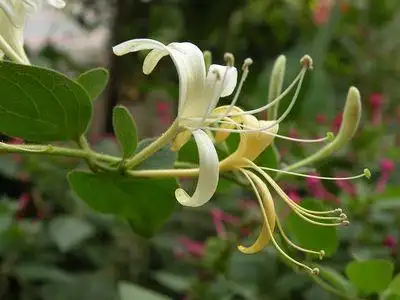
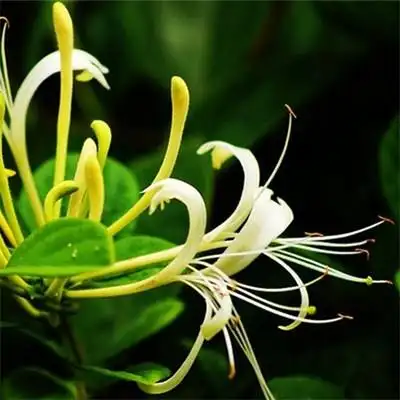
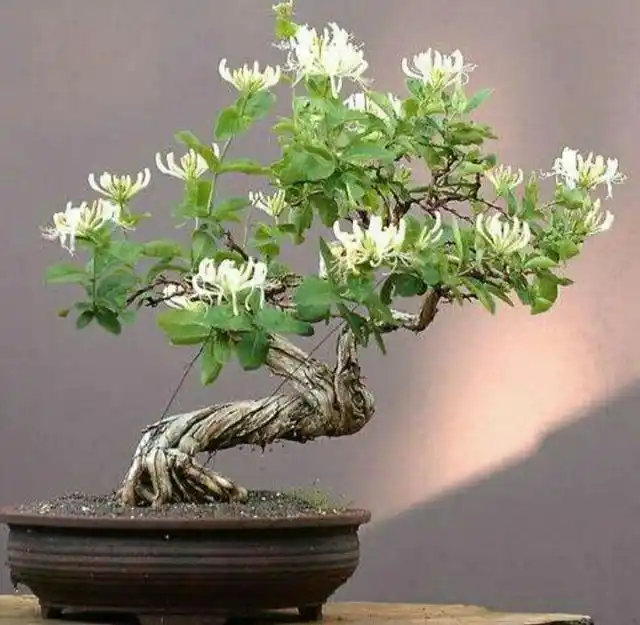
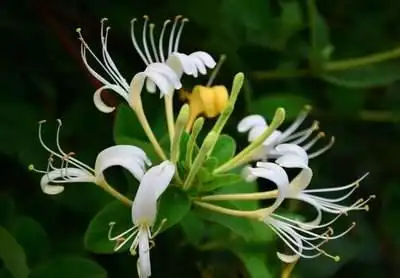
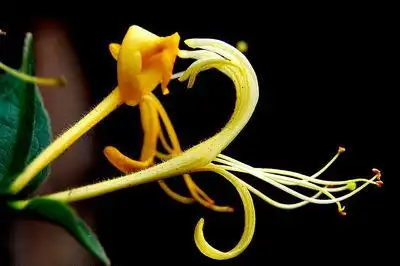
Honeysuckle, also known as honeysuckle, is white when it first blooms and then turns yellow, hence the name honeysuckle. It is also known as the Mandarin Duck Vine because it has one stem and two flowers, resembling a pair of mandarin ducks dancing together. Traditional Chinese medicine believes that honeysuckle can not only dispel wind heat, but also clear blood toxins. It has good therapeutic effects on various heat diseases, such as body heat, rash, freckle, heat toxin ulcer, sore throat, etc.
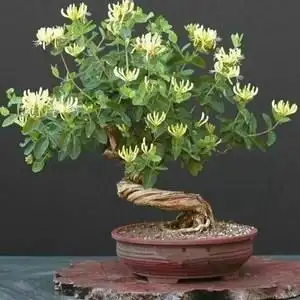
Honeysuckle has a well-developed root system and strong vitality. It does not require high soil requirements and is suitable for family potted plants. So, how should honeysuckle bonsai be maintained and managed?
1、 Soil
The key to home honeysuckle bonsai is soil. Honeysuckle prefers loose and breathable, acidic or slightly acidic soil. The cultivation soil should be nutrient rich, loose, and have strong water retention capacity. Usually, garden soil, humus soil, vermiculite, and perlite can be mixed in a ratio of 5:2:1:1 to prepare the cultivation soil. The prepared culture soil is best treated with insecticide and sterilization before use.
2、 Watering
Honeysuckle is drought resistant and afraid of waterlogging. The amount of watering is highest in summer, followed by spring and autumn, and lowest in winter. Watering should be done in a way that is both dry and wet. When the soil in the pot loses moisture and becomes dry, water it until the bottom of the pot is drained. Normally, keep the soil in the pot moist. If the soil is too dry, it will affect growth and flowering. During the rainy season, it is important to take shelter from the rain and avoid water accumulation in the soil. Otherwise, the root system is prone to decay, ultimately leading to plant death.
3、 Fertilization
honeysuckle bonsai can be treated with a small amount of cake fertilizer as base fertilizer when changing pots, and balanced fertilization during the growth period to meet the needs of the plant; Before flower bud formation, phosphorus and potassium fertilizers can be applied to promote flower bud formation and increase flowering rate; Applying some nitrogen fertilizer appropriately during the bud stage can make the flowers bloom big and fragrant. Apply less or no fertilizer in winter.
4、 Light
Honeysuckle is a crop with long daylight hours and prefers environments with ample sunlight. Family potted plants should be placed in sunny areas, otherwise the stems will grow steep and the branches will be thin and weak, and the leaves will easily turn yellow and fall off, which will affect the growth and flowering of the plants. Except for the need for appropriate shading during high temperatures in summer, all other seasons should be able to receive all-weather sunlight.
5、 Heart picking and pruning
In order to make honeysuckle bonsai more beautiful, pruning should be used to make the entire plant branches coordinated, evenly distributed, and clearly layered. After planting honeysuckle in pots, dwarfing and pruning should be carried out to cultivate thick and robust branches. During the growth period, remove the vigorously growing buds in a timely manner, and remove the center of the strong growing branches. Prune the long and leave the short to promote the plant to have more flowering branches. This not only makes the plant shape plump and beautiful, but also increases the flowering rate.
6、 Changing pots
Honeysuckle grows vigorously, but after one to two years of cultivation, the nutrients in the pot soil are basically exhausted, the soil becomes hard, and the roots cover the entire pot, seriously affecting plant growth. At this time, it is necessary to turn the pot and change the soil. The best time to turn the pot and change the soil is during the slow growth period of honeysuckle. Trim the root system before changing pots, which can promote the growth of new roots and improve their absorption capacity. Before laying soil, cover the water holes at the bottom of the basin with broken tiles or bricks to improve the overall breathability and permeability of the soil; Then place the coarser cultivation soil on the bottom layer, and add a small amount of decomposed manure as the base fertilizer; After covering the fertilizer with cultivation soil, first place the plant and unfold the root system, then slowly add the cultivation soil to bury the entire root system in the soil; Then gently press it with your hands and water it slowly until water flows out from the bottom hole of the pot, making the soil completely wet. Finally, place the seedlings in a cool and shady place for half a month before placing them in well ventilated sunlight for normal maintenance.