Littleleaf boxwood is a common ornamental foliage plant, widely used in landscaping and gardening. However, for beginners, there are many misconceptions about its preference for light. This article will provide a detailed analysis of the light requirements of littleleaf boxwood to help enthusiasts better understand and cultivate this beautiful plant.
I. Understanding Littleleaf Boxwood
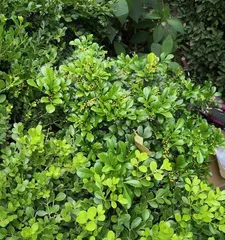
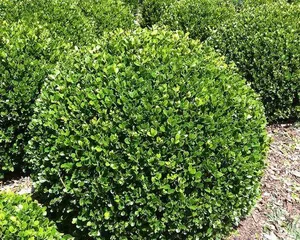
Littleleaf boxwood (scientific name: Buxus microphylla) is one of the common shrubby ornamental plants. Its leaves are dark green, usually slightly smaller than those of the large-leaved boxwood, and its dense foliage can form beautiful green walls or bonsai.
II. Sunlight Conditions
Littleleaf boxwood is a plant that is suitable for growing in semi-shaded and semi-sunny environments. If it is exposed to intense sunlight for long periods, it will cause the leaves to turn yellow or even wither. At the same time, it cannot be placed in overly shady places, as this will affect its normal photosynthesis.
III. Temperature Conditions
Littleleaf boxwood is relatively sensitive to temperature, with the most suitable growth temperature being 15°C-25°C. In cold winters, it is necessary to keep it warm to avoid frost damage.
IV. Humidity Requirements
Littleleaf boxwood has relatively high humidity requirements, especially during hot summer months. You can increase the surrounding humidity by misting or placing a water tray, while also being careful to avoid overwatering, which can lead to root rot.
V. Soil Requirements
Littleleaf boxwood also has certain requirements for soil. It prefers moist, loose, well-draining acidic soil. You can improve soil quality by adding mature organic matter.
VI. Suitable Planting Environment
Littleleaf boxwood is suitable for planting in environments such as courtyards, parks, and along streets. Because of its dense foliage, it can provide good shading and sound insulation, while also having a strong beautifying effect.
VII. Littleleaf Boxwood Care Tips
① Prune branches and leaves in a timely manner to maintain a neat shape;
② Water regularly, avoiding excessive or insufficient watering;
③ Fertilize appropriately to avoid making the soil overly fertile;
④ Prevent pests by choosing biological pesticides for control.
VIII. Common Problems with Littleleaf Boxwood
① Yellowing leaves: may be caused by excessive sunlight or lack of nutrients;
② Wilting: usually caused by insufficient watering or soil that is not loose enough;
③ Pest infestation: can be treated with pesticide spraying or manually picking off insects.
IX. Propagation Methods for Littleleaf Boxwood
Littleleaf boxwood can be propagated by cuttings, division, and sowing. Among these, cuttings are the most common and have a higher success rate.
X. Uses of Littleleaf Boxwood
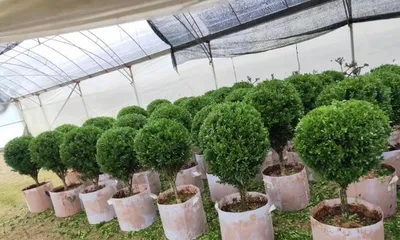
In addition to being used for landscaping in courtyards, parks, and streets, littleleaf boxwood can also be used to make bonsai, reliefs, and garden sculptures.
XI. Cultural Significance of Littleleaf Boxwood
In traditional Chinese culture, littleleaf boxwood is regarded as an auspicious object. Its beautiful shape is often used in the construction of gardens rich in cultural heritage.
XII. Aesthetic Value of Littleleaf Boxwood
With its dense foliage and delicate leaves, littleleaf boxwood has a beautiful shape and is considered an important component of garden landscapes.
XIII. Economic Value of Littleleaf Boxwood
As one of the most widely used plants in landscaping, littleleaf boxwood has a certain economic value in the market. At the same time, it can also be sold as an ornamental bonsai.
XIV. Environmental Impact of Littleleaf Boxwood
Littleleaf boxwood can absorb harmful gases in the air, playing a role in air purification. It can also maintain soil moisture, preventing water loss from the land.
XV.
Littleleaf boxwood is a beautiful ornamental foliage plant, and its environmental conditions, such as light, temperature, humidity, and soil, require our attention. Through proper care techniques, we can cultivate it better and play its role in beautifying the environment and purifying the air in landscaping.