Care Methods and Management Precautions for Juniper Bonsai

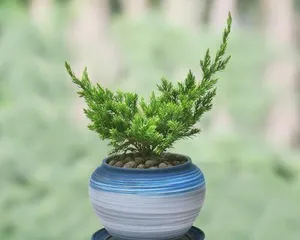
Juniper bonsai is a very popular bonsai plant. Due to its strong cold resistance and ability to adapt to various environments, it has become one of the favorite bonsai varieties. However, the care methods for juniper bonsai require some skills and precautions. Below, we will detail the care methods and management precautions for juniper bonsai to help enthusiasts better care for this beautiful plant.
Soil Selection
To ensure the healthy growth of a juniper bonsai, attention must be paid to soil selection. Choose nutrient-rich, well-draining sandy loam or leaf mold, while also ensuring the soil's aeration and water retention.
Watering Techniques
Juniper bonsai has a high demand for water, but it should not be overwatered. Generally, water once or twice a week, making sure to water thoroughly each time. When watering, avoid splashing water onto the leaves to prevent rot.
Sunlight Selection
Juniper bonsai prefers a sunny environment but should not be exposed to direct scorching sun. The most suitable lighting condition is to place it in a semi-shaded outdoor spot during the morning or evening when the sunlight is gentle.
Temperature Regulation
Juniper bonsai is highly adaptable but has specific temperature requirements. In spring and summer, the ideal temperature is 20°C-30°C; in autumn and winter, the temperature should not drop below 5°C.
Fertilization Methods
Proper fertilization can promote the growth of juniper bonsai, but over-fertilization should be avoided. Generally, applying a compound fertilizer once a month is sufficient.
Pruning Techniques
Juniper bonsai requires regular pruning to maintain its beautiful shape. When pruning, use scissors to trim the branches neatly and preserve the tree's form.
Pest and Disease Control
Juniper bonsai is susceptible to pests such as whiteflies and mites. Timely measures must be taken for control, and specialized insecticides can be used for spraying.
Repotting Timing
If you want to repot a juniper bonsai into another container, it is best to do so in spring and autumn. During repotting, be careful not to damage the roots, and water promptly afterward.
Dormant Period Care
Juniper bonsai enters a dormant period in winter. At this time, it is important to maintain suitable temperature and humidity, and reduce watering frequency to prevent root rot.
Preventing Yellowing Leaves
If you find the leaves of a juniper bonsai turning yellow, you can apply foliar fertilizer once a month and ensure adequate light to promote nutrient absorption.
Flower Bud Care
The flower buds of a juniper bonsai also require special attention during their growth. It is necessary to regularly remove dead leaves around them to promote healthy development.
Regular Soil Replacement
Juniper bonsai will deplete the nutrients in the soil during its growth, so it is necessary to replace the soil regularly to ensure its good growth condition.
Avoiding Strong Winds
The branches of a juniper bonsai are relatively thin and can be easily affected by strong winds. Therefore, it is important to place it indoors or under a cover to protect its growth.
Nutrient Supplementation
To ensure the healthy growth of a juniper bonsai, it is necessary to continuously supplement it with nutrients. You can apply fertilizer regularly every month and use organic fertilizers like cod liver oil for nutritional supplementation.
Through the detailed introduction of the care methods and management precautions for juniper bonsai above, it is believed that everyone now has a certain understanding of how to properly care for this plant. Only by reasonably selecting soil, watering, and fertilizing can a juniper bonsai grow strong and become a beautiful addition to your home or office space.