I have an Anthurium at home, and looking at its vibrant red color just brightens my mood! Don't underestimate this Anthurium; getting it to bloom beautifully and abundantly is a real art. Today, let's talk about how to care for your Anthurium to encourage blooming and make it a stunning feature in your home!
Anthurium Blooming: The Foundation is the Soil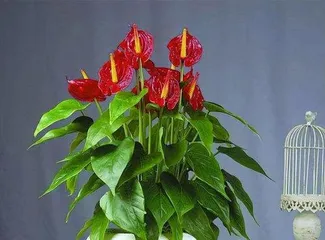
Anthuriums thrive in fertile, loose, and well-draining soil. You can mix it in a ratio of 4:2:2 of humus soil, sandy soil, and peat soil. This ensures the soil is nutrient-rich while allowing the roots to breathe freely. Don't forget to add a layer of finely crushed rice husks at the bottom of the pot to improve drainage and keep the roots away from standing water.
Watering is Key to a Healthy Anthurium
Although Anthuriums like a humid environment, they cannot tolerate waterlogging. When watering, follow the principle of "watering when the soil is dry to the touch." You can stick your finger into the soil; if it's dry 3 cm down, it's time to give it a thorough watering. In the hot summer, water evaporates quickly, so you may need to water more frequently. In the winter, reduce watering to prevent root rot.
Sunlight and Fertilizer: The Keys to Anthurium Blooming
While Anthuriums prefer shade, they cannot be kept in complete darkness. Place them in a spot with bright, indirect light to allow for photosynthesis and nutrient accumulation. As for fertilizer, Anthuriums need plenty of nutrients during their growing season. You can fertilize every 15-20 days. Use a balanced fertilizer during the growth period, and switch to a phosphorus-potassium fertilizer before blooming to make the flowers more vibrant.
Temperature and Ventilation: Creating a Comfortable Home for Your AnthuriumThe ideal growing temperature for an Anthurium is between 20-30°C. In the summer, provide some shade to protect it from the sun. In the winter, keep it warm and avoid temperatures that are too low. At the same time, ensure good ventilation so the Anthurium can get fresh air and stay free from pests and diseases.
Pest and Disease Control: Ensuring Your Anthurium's Healthy GrowthAnthuriums are susceptible to bacterial wilt, so it's important to prevent pests and diseases. Regularly spray diluted protective agents like copper-based solutions, oxytetracycline, or Kuikuning to keep the plant healthy.
Tips for Getting Your Anthurium to Bloom1. Repotting: Repot your Anthurium every 1-3 years with fresh soil to give the roots enough space to grow.
2. Pruning: Timely prune withered, yellow, or weak leaves and stems to keep the plant tidy and encourage new growth.
3. Proper Fertilization: During the growing season, fertilize every 15-20 days. Switch to a phosphorus-potassium fertilizer before blooming to make the flowers more vibrant.
4. Maintain Humidity: During the growing season, lightly mist the leaves to maintain a certain level of air humidity, which will keep the leaves looking bright and green.
Caring for an Anthurium isn't as difficult as it might seem. Once you master these tips, your Anthurium is sure to bloom beautifully and abundantly, becoming a stunning feature in your home! Give it a try and let your Anthurium bring you good luck and joy!