Abstract:
The maple tree is a beautiful plant whose elegant shape and vibrant colors make it irresistible. To have your own maple tree, you need to learn the techniques for propagating maple cuttings. This article will introduce you to the fastest method for red maple cutting propagation, allowing you to easily master this skill.
The maple tree is a beautiful plant whose elegant shape and vibrant colors make it irresistible. To have your own maple tree, you need to learn the techniques for propagating maple cuttings. This article will introduce you to the fastest method for red maple cutting propagation, allowing you to easily master this skill.
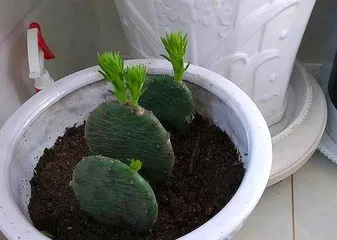
Selecting Healthy Maple Branches
1.1 Choosing healthy maple branches without pests or diseases is the primary condition for successful cutting propagation.
1.2 Select new shoots with a diameter between 0.5~1.0 cm and a length of about 20~30 cm. Choose to pick during spring when growth is vigorous to ensure the freshness of the branches.
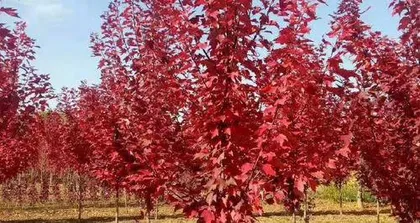
1.3 Avoid selecting areas with damaged scars for cutting, as this may affect growth.
Cutting the Propagation Branches
2.1 Use scissors or a hand saw to cut the branches into propagation pieces of 20~30 cm long, leaving at least 3 bud eyes on each piece.
2.2 At 1~2 cm away from the bud eye, use a blade to cut through the bark layer, exposing the woody part, which can increase the area for water and nutrient absorption.
2.3 Disinfect the blade and scissors with 50% alcohol to prevent bacterial infection.
Soaking in Nutrient Solution
3.1 Take a basin of clean water, add appropriate amount of rooting powder and compound fertilizer, and dissolve evenly.
3.2 Soak the cut propagation branches in the nutrient solution to allow them to absorb moisture and nutrients.
3.3 Change the nutrient solution every 2~3 days to maintain its cleanliness.
Adjusting Environmental Humidity
4.1 After planting, place them in an environment with higher temperature, weaker light, and greater humidity to promote root formation.
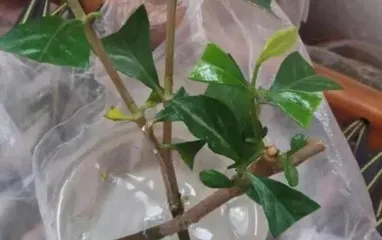
4.2 You can wrap the propagation branches with plastic bags or plastic film to create a small greenhouse.
4.3 Open the plastic bag daily for ventilation to maintain appropriate environmental humidity.
Paying Attention to Temperature and Light
5.1 Maple trees require a warm environment for growth, so pay attention to temperature control during propagation.
5.2 When propagating in spring, room temperature should be maintained between 20~25°C.
5.3 Light is also an important factor affecting cutting propagation, so choose places with weak light and avoid direct sunlight.
Keeping Soil Moist
6.1 After inserting the propagation branches into soil, keep the soil moist but not overly wet.
6.2 You can use a spray bottle to water daily, keeping only the soil surface moist.
6.3 Avoid propagating during dry weather to prevent dehydration and death of the cuttings.
Preventing Cuttings from Falling Over
7.1 After planting, gently press the soil around the cuttings to prevent them from falling over.
7.2 You can use supports or small sticks to prop up the cuttings to keep them growing vertically.
7.3 Gently tapping the cuttings can help them bind more closely with the soil, improving rooting rate.
Timely Watering
8.1 During the first week after planting, water appropriately every day to keep the soil moist.
8.2 As the cuttings gradually sprout, reduce watering frequency to once a week.
8.3 After successful rooting, water as needed but don't let the soil become overly wet.
Regular Repotting
9.1 When the cuttings develop new roots, transplant them to larger pots in a timely manner.
9.2 The potting soil should be fertile, loose, and well-draining, using nutrient-rich fertilizers to supply nutrition.
9.3 Regularly prune side branches of the cuttings to maintain a neat crown.
Paying Attention to Pest and Disease Control
10.1 Maple trees are susceptible to pests and diseases such as aphids and powdery mildew, so timely prevention and control is necessary.
10.2 You can use organic fertilizers and biological pesticides for environmentally friendly control, avoiding chemical pesticides.
10.3 Regularly check the health status of the maple tree and address problems promptly.
Paying Attention to Light
11.1 Maple trees need appropriate light to grow normally, but excessive light can cause drying and leaf drop.
11.2 In summer, place the maple tree in partial shade and use shading nets to prevent direct sunlight.
11.3 In spring and autumn, you can place the maple tree in sunny locations to promote normal growth.
Paying Attention to Pruning
12.1 Pruning the shape of maple trees is one of the important factors affecting their growth and should be done in a timely manner.
12.2 When pruning, choose appropriate methods and timing based on the growth characteristics of the maple tree.
12.3 Autumn leaf-fall period and early spring are suitable times for pruning maple trees, which can improve the beauty and quality of growth through shape pruning.
Paying Attention to Fertilizer Application
13.1 Maple trees need appropriate fertilizer supply to ensure normal growth.
13.2 When applying fertilizer, choose compound fertilizers containing nitrogen, phosphorus, potassium and other nutrients, and apply according to package instructions.
13.3 During hot summer weather, you can appropriately increase fertilizer supply to promote maple tree growth.
Paying Attention to Winter Protection
14.1 Winter is a period when maple trees are vulnerable to damage and requires special protection.
14.2 In cold weather, move the maple tree indoors or to warmer places and appropriately increase humidity and light.
14.3 During rainy and snowy weather, remove snow piles in time to avoid crushing the maple tree.
Tips for Successful Maple Cutting Propagation
15.1 The fastest method for maple cutting propagation requires attention to many details, from selecting cuttings to regular watering and fertilization, all need to be mastered carefully.
15.2 Appropriate environmental humidity, temperature and light, fertilizer application, and pruning are all important factors affecting the quality of maple tree growth.
15.3 Only by properly utilizing these factors can you succeed in maple cutting propagation and obtain your own beautiful maple tree.
```